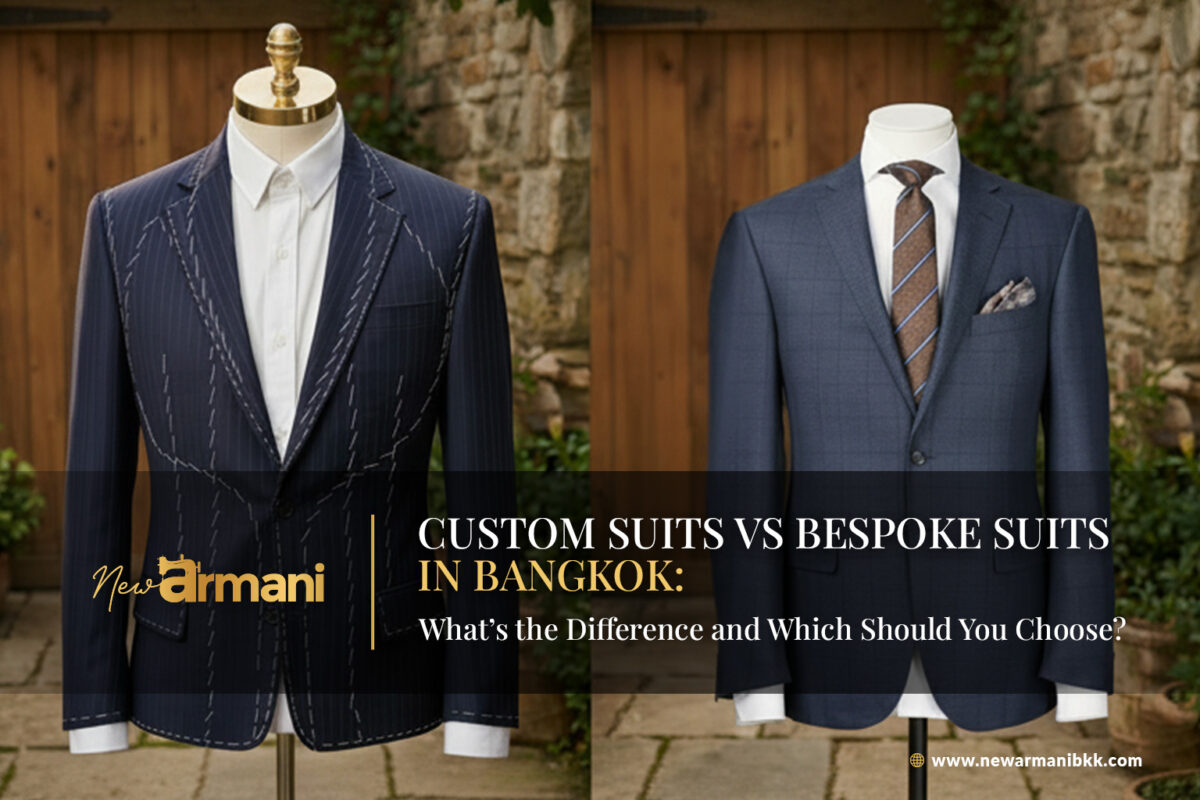
Here are nine important details to check when judging the quality of a tailored suit.
1. The Shoulders Should Sit Naturally
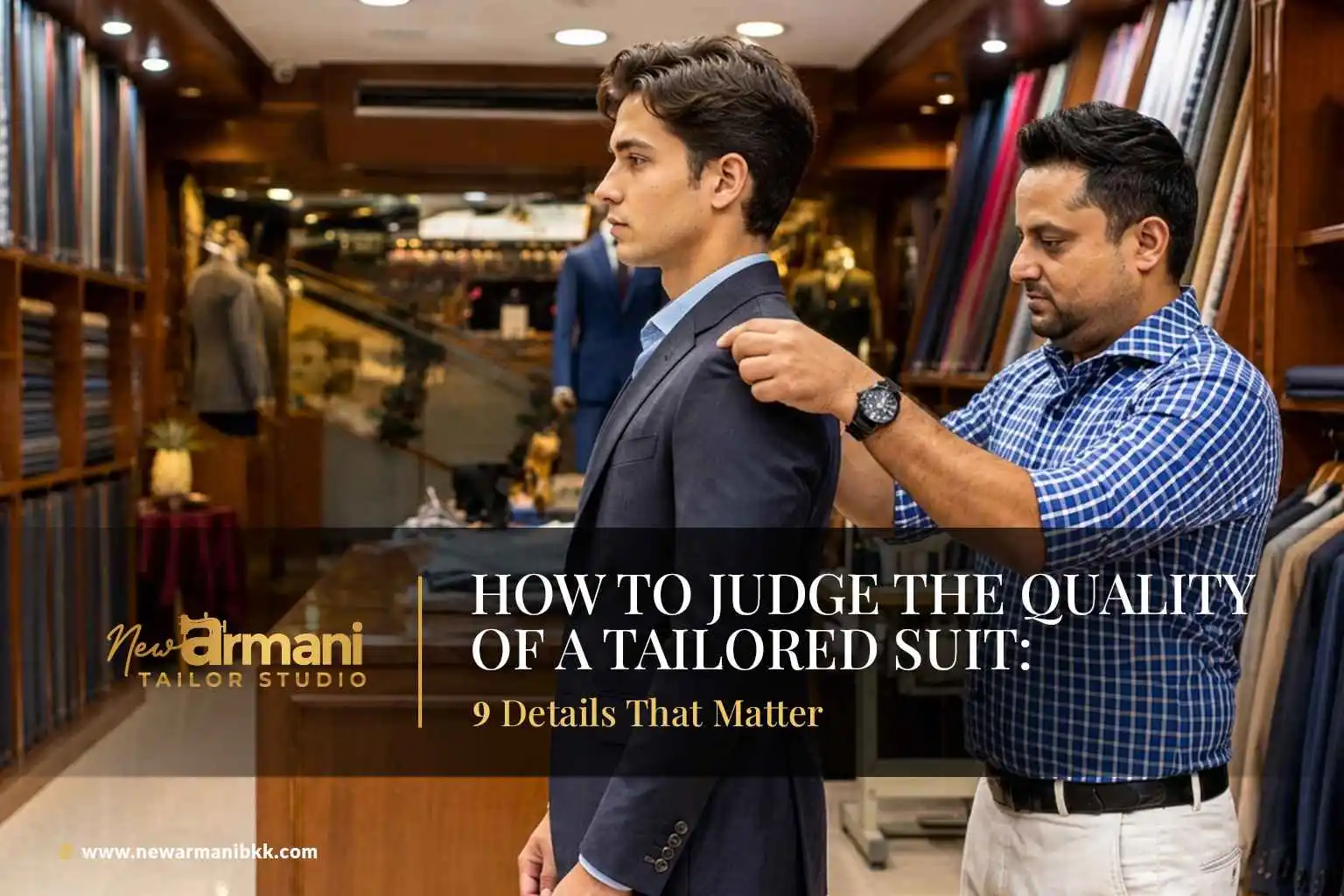
The shoulders are one of the most important areas of a suit jacket because they are difficult to correct once the garment has been constructed.
A well-tailored jacket should follow your natural shoulder line without extending too far, collapsing inward, or creating visible dents.
When standing naturally, the shoulder should look smooth and transition cleanly into the sleeve.
2. Check the Collar Fit
The jacket collar should sit neatly against your shirt collar.
A visible space between the two is often called a collar gap and may indicate that the jacket has not been properly adjusted for your posture or shoulder position.
The collar should remain clean and close to the neck without pulling or bunching when you stand naturally.
3. Look at the Lapels
Lapels should sit smoothly against the chest and create a natural shape through the front of the jacket.
They should not lift away from the body, buckle, or appear uneven.
The lapel roll can also reveal how well the jacket has been constructed. A clean, natural roll gives the front of the suit more dimension and helps create a polished appearance.
4. Check the Jacket Balance
A good suit should look balanced from the front, side, and back.
Stand naturally in front of a mirror and look for problems such as:
- Front panels lifting
- Excess fabric around the back
- Diagonal wrinkles
- Uneven jacket length
- Pulling around the buttons
These issues can indicate that the garment has not been properly adjusted for your individual posture.
Good tailoring considers more than measurements. It also considers how your body naturally stands and moves.
5. Examine the Chest and Waist
The jacket should follow the shape of your body without feeling too tight.
When buttoned, it should close comfortably without producing strong pulling lines around the button. At the same time, the jacket should not appear overly loose or shapeless.
A properly tailored waist creates definition while still allowing you to sit, walk, and move comfortably.
The objective is balance between structure and comfort.
6. Check the Sleeves
Suit sleeves should hang naturally when your arms are relaxed.
Diagonal wrinkles or twisting can sometimes indicate that the sleeve position does not match the natural angle of your arms.
Sleeve length also affects the overall appearance of the suit. Traditionally, a small amount of shirt cuff is visible below the jacket sleeve, although the exact amount depends on personal preference.
During a fitting, your tailor should check both the length and position of the sleeves.
7. Pay Attention to the Trousers
A quality tailored suit requires properly fitted trousers as well as a well-made jacket.
The trousers should sit comfortably around the waist and fall cleanly through the seat, thighs, and legs without excessive pulling or loose fabric.
Important areas to check include:
- Waist
- Seat
- Thigh
- Knee
- Trouser opening
- Length
The trouser break also affects the overall style. Some people prefer little or no break for a cleaner modern look, while others prefer a slight break for a more traditional appearance.
The key is consistency with the overall suit style.
8. Consider the Fabric and Construction
Fabric quality matters, but expensive fabric alone does not make a great suit.
The material should suit your lifestyle, climate, and intended use. A frequently worn business suit, for example, may require different fabric from a tuxedo or destination wedding suit.
Construction is equally important.
Ask your tailor how the jacket is structured, what type of internal construction is used, and why a particular fabric or construction method is being recommended.
If you're unsure which tailoring approach suits you, understanding the difference between custom suits and bespoke suits can help before placing an order.
A knowledgeable tailor should be able to explain these choices clearly.
9. Inspect the Finishing
The final details often reveal how much care has gone into the suit.
Take a closer look at:
- Buttonholes
- Buttons
- Stitching
- Pocket alignment
- Lining
- Collar shape
- Trouser finishing
- Overall symmetry
Each detail may seem small, but together they have a noticeable impact on how polished the finished garment appears.
Clean finishing is usually a sign that attention has been maintained throughout the tailoring process.
What Should You Look for When Choosing a Tailor?
Price and turnaround time are useful considerations, but they should not be the only factors in your decision.
Look at how the tailor approaches measurements, fittings, fabrics, construction, adjustments, and communication.
Recent customer feedback can also help you understand whether the quality and service are consistent.
If you are comparing different tailoring shops, our guide to the best tailors in Bangkok provides a broader look at established options across the city.