Blog
How Bangkok Became the Hub for Bespoke Suits
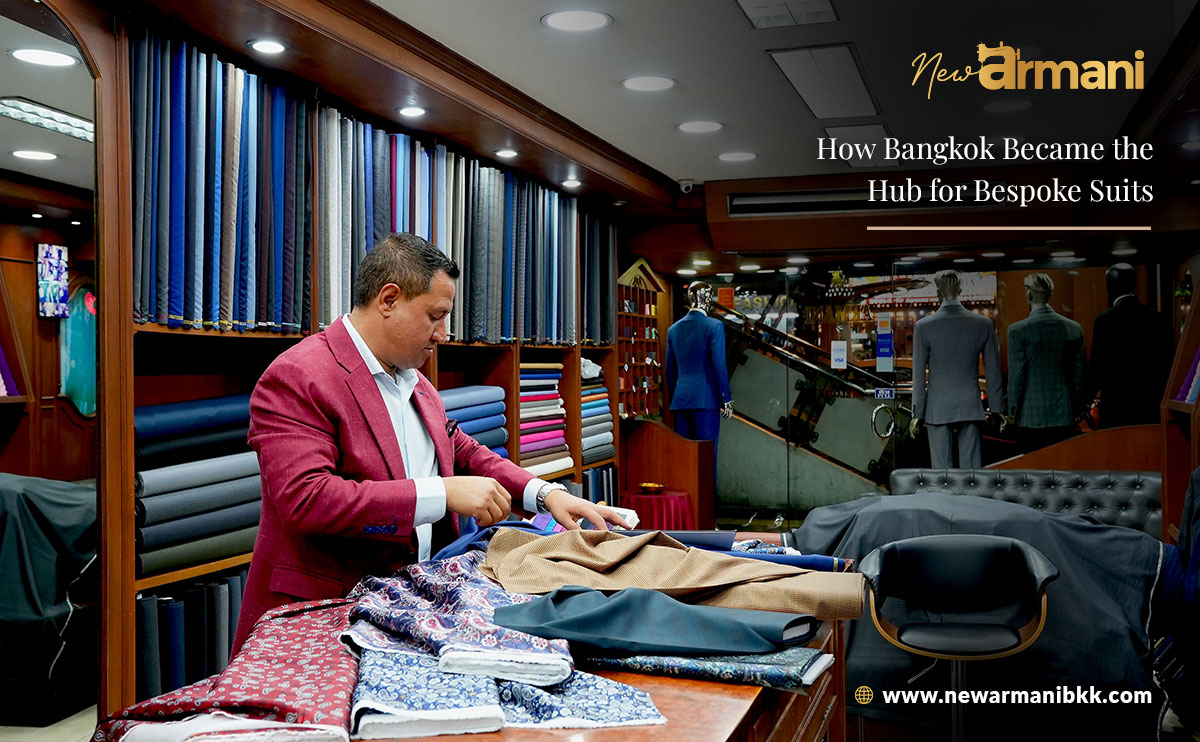
Bangkok became a major destination for bespoke suits because it brought together skilled tailors, an established textile and garment industry, access to international fabrics, competitive pricing and a steady flow of global travelers.
Unlike traditional tailoring destinations where a bespoke suit may require several weeks, many Bangkok tailors developed processes that fit consultations and fittings around shorter business trips and holidays without removing the personal service that makes tailored clothing valuable.
Today, visitors come to Bangkok not only for food, culture and shopping, but also for garments created around their measurements, posture, style and reason for wearing them.
However, The city did not invent bespoke tailoring. Its success came from adapting an older European craft to a modern international destination.
To understand why Bangkok became such an important tailoring destination, it helps to begin with the origins of the bespoke suit itself.
Table of Contents
The History of the Bespoke Suit
The modern tradition of bespoke tailoring is closely associated with Savile Row in London. Historically, a piece of cloth was considered “bespoken” when it had been reserved for a particular customer. The word gradually became connected with clothing designed and produced specifically for one individual.
London Develops a Private Tailoring Tradition
Tailors serving aristocrats, officers and wealthy clients refined methods for cutting garments according to an individual’s body, posture and personal requirements.
Savile Row Becomes Associated with Bespoke Craftsmanship
Individual patterns, specialized cutters, hand construction and several fitting stages became defining features of traditional bespoke tailoring.
Personalized Tailoring Spreads Internationally
International trade, travel and expanding textile industries helped tailoring traditions develop throughout Europe, North America and Asia.
Bangkok Develops a Global Tailoring Reputation
Bangkok tailors increasingly served diplomats, expatriates, business travelers and tourists seeking personalized garments during visits to Thailand.
A traditional bespoke suit is not simply a standard suit altered to fit. It is developed around the wearer through individual measurements, pattern work, garment construction and fitting adjustments.
Begin Your Bespoke Suit Journey
Discuss your preferred style, travel dates and fitting schedule with the New Armani tailoring team before you arrive.
What Makes a Suit Bespoke?
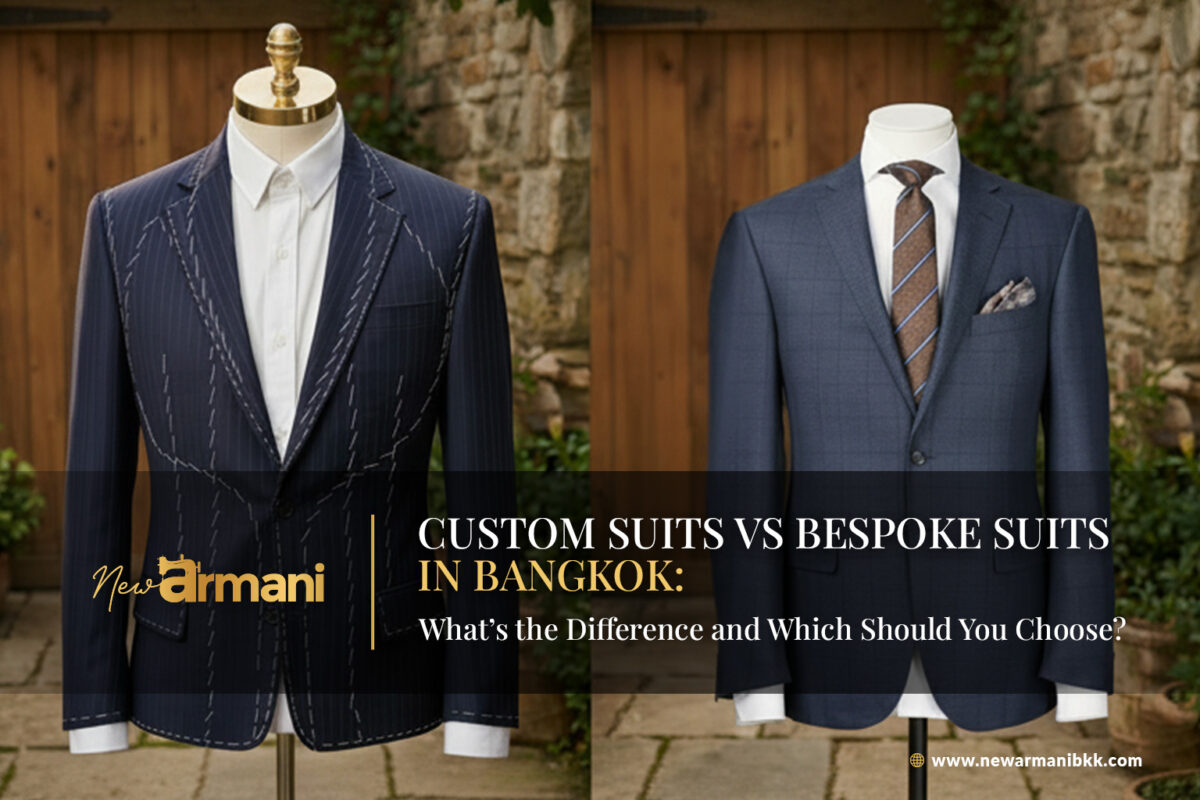
The word bespoke is sometimes used broadly in modern clothing marketing. Traditionally, however, a bespoke suit involves a more individualized process than ready-to-wear or standard made-to-measure clothing.
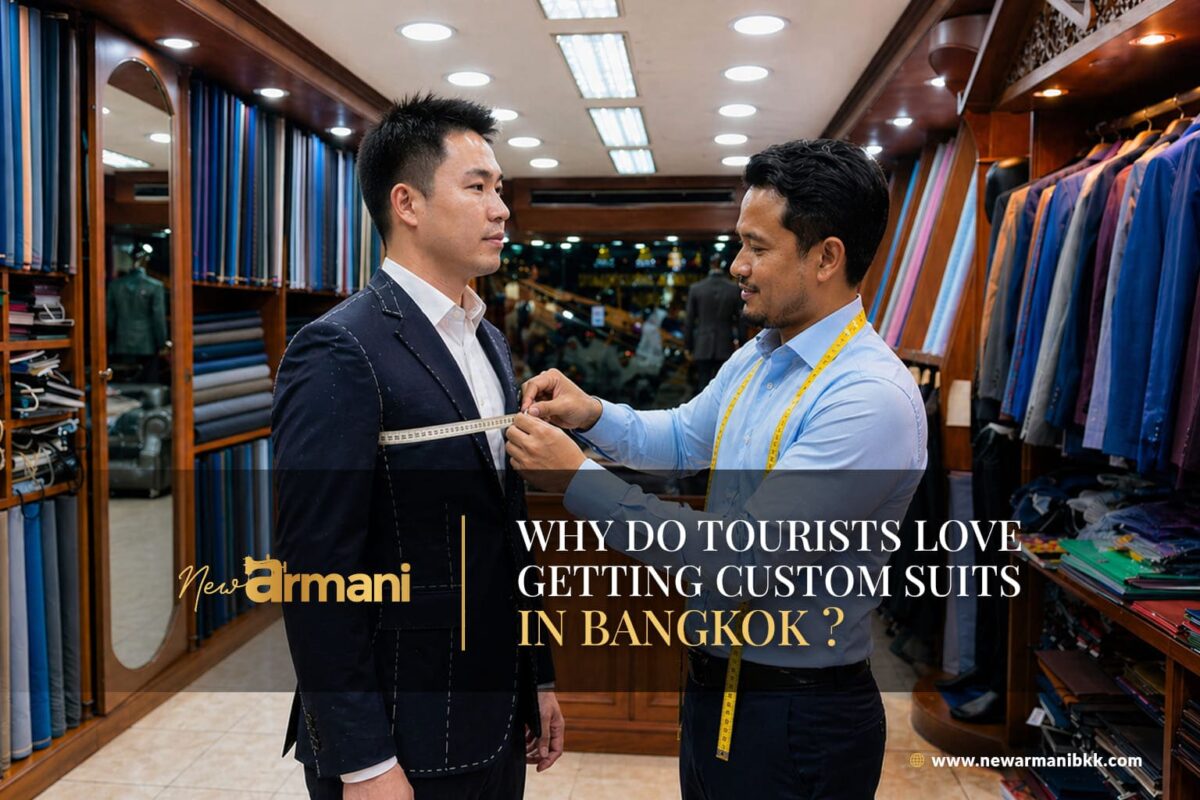
A cutter may examine more than basic chest, waist and trouser measurements. Shoulder balance, posture, arm position, body asymmetry, preferred jacket length and the way the customer naturally moves can all influence the final pattern and fitting.
| Feature | Ready-to-Wear | Made-to-Measure | Traditional Bespoke |
|---|---|---|---|
| Starting pattern | Standard size | Existing pattern adjusted | Individual pattern created for the client |
| Measurements | General sizing | Customer measurements applied to a base pattern | Detailed measurements, posture and balance considered |
| Fittings | Usually alterations only | May include a fitting | Multiple fitting and refinement stages may be used |
| Design freedom | Limited to available stock | Selected customization | Extensive personalization of style and proportion |
| Best suited for | Convenience and immediate purchase | Personalized fit with a streamlined process | Individual fit, design and craftsmanship |
Made-to-measure can still produce an excellent garment when the process is handled carefully. The important point is transparency. Customers should understand how the garment is being created, what construction is included and how many fittings are available.
Why Bangkok Became a Hub for Bespoke Suits
Bangkok’s tailoring reputation was not created by one shop or one trend. It developed through a combination of international tourism, workshop knowledge, textile access, customer service and practical value.
An International Customer Base
Bangkok attracts tourists, business travelers, expatriates, wedding clients and professionals from around the world. Tailors learned to serve customers with different body shapes, style preferences, cultural expectations and travel schedules.
Experienced Tailoring Communities
A suit may involve consultants, cutters, jacket makers, trouser makers, fitters and finishing specialists. Bangkok’s long-established garment sector helped support communities with practical pattern, construction and alteration skills.
Broad Fabric Selection
Customers can often compare tropical wool, linen, cotton, formalwear cloth, blends and imported fabrics in one consultation. This allows the material to be selected around climate, occasion, budget and intended use.
Traveler-Friendly Fitting Schedules
Many Bangkok tailors organize measurements and fittings around hotel stays, meetings and departure dates. This makes the process practical for visitors, provided enough time is allowed for genuine fitting and adjustment.
Personal Style Choices
Lapels, buttons, pockets, jacket shape, trouser rise, side adjusters, lining and other details can be chosen according to the customer’s needs rather than a fixed retail design.
Competitive Value
Bangkok may provide access to personalized fittings and customization at a different price level from many traditional luxury capitals. Quality still depends on fabric, construction, fitting and workshop standards, not price alone.
Bangkok’s Service Model Suits Modern Travelers
A visitor can begin with a fabric consultation and measurements early in the trip, return for a fitting and collect the garment before departure when the design and production schedule allow.
Responsible tailors should confirm a realistic timeline after reviewing the garment, fabric availability, number of pieces, required fittings and workshop capacity. A simple business suit and a complex wedding tuxedo should not automatically receive the same completion promise.
Fabric Knowledge Matters as Much as Fabric Variety
A wide fabric selection is useful only when the tailor can explain how each option behaves. Lightweight wool may be practical for business travel, while linen can work well for warm-weather events but will crease more visibly. A heavier cloth may provide structure but feel less comfortable in Bangkok’s climate.
The best advice considers how often the garment will be worn, where it will be used, how formal it needs to be and how the customer prefers it to feel.
A good bespoke suit begins with a conversation. Measurements matter, but so do the customer’s posture, routine, destination, occasion and the way they want to feel in the finished garment.
Tailoring insight from New Armani Tailor Studio
Bangkok Bespoke Tailoring Today
Bangkok’s tailoring industry now serves customers both during and after their visits. Digital consultations, saved order details and international shipping make it possible for returning customers to discuss future garments after leaving Thailand.
Saved measurements can make reordering more convenient, but they should not replace communication. Body shape, posture and fit preferences can change, so customers should confirm whether their existing measurements still feel accurate before production begins.
Modern Bangkok tailoring therefore combines two different strengths: the personal consultation and fitting traditions associated with bespoke clothing, and the fast communication expected by international customers today.
See How to Order a Custom Suit in Bangkok
Learn what happens from the first appointment through measurements, fittings, final adjustments and delivery.
How to Choose a Bespoke Tailor in Bangkok
Bangkok offers many tailoring options, so customers should compare the process rather than relying only on storefront claims, the lowest price or promises of extremely fast completion.
Ask What the Quoted Price Includes
Confirm the garment pieces, fabric, construction method, fittings, alterations, delivery and any additional charges before payment. A clear written quote prevents confusion later.
Understand the Fitting Process
A fitting allows the tailor to evaluate areas that measurements alone may not reveal, including shoulder balance, collar position, chest shape, sleeve length, trouser seat, trouser break and overall movement.
Look at Real Customer Work
Photographs of garments made for real customers provide more useful evidence than manufacturer catalog images alone. Look for examples across different body types, occasions and styles.
Review Recent Independent Feedback
Detailed reviews can reveal how a tailor handles consultation, communication, deadlines, fitting changes and after-sales assistance. Read recent feedback on more than one platform and pay attention to patterns rather than a single comment.
- Ask whether an individual pattern or adjusted base pattern will be used.
- Confirm the fabric composition and supplier information.
- Ask whether the jacket is fused, half-canvas or full-canvas.
- Confirm how many fittings are included in your schedule.
- Share your exact departure date before placing the order.
- Ask what happens when further adjustments are required.
- Confirm international delivery charges and timing in writing.
- Choose a tailor who explains the process without pressuring you.
New Armani Tailor Studio Experience
A Tailoring Process Built Around the Customer
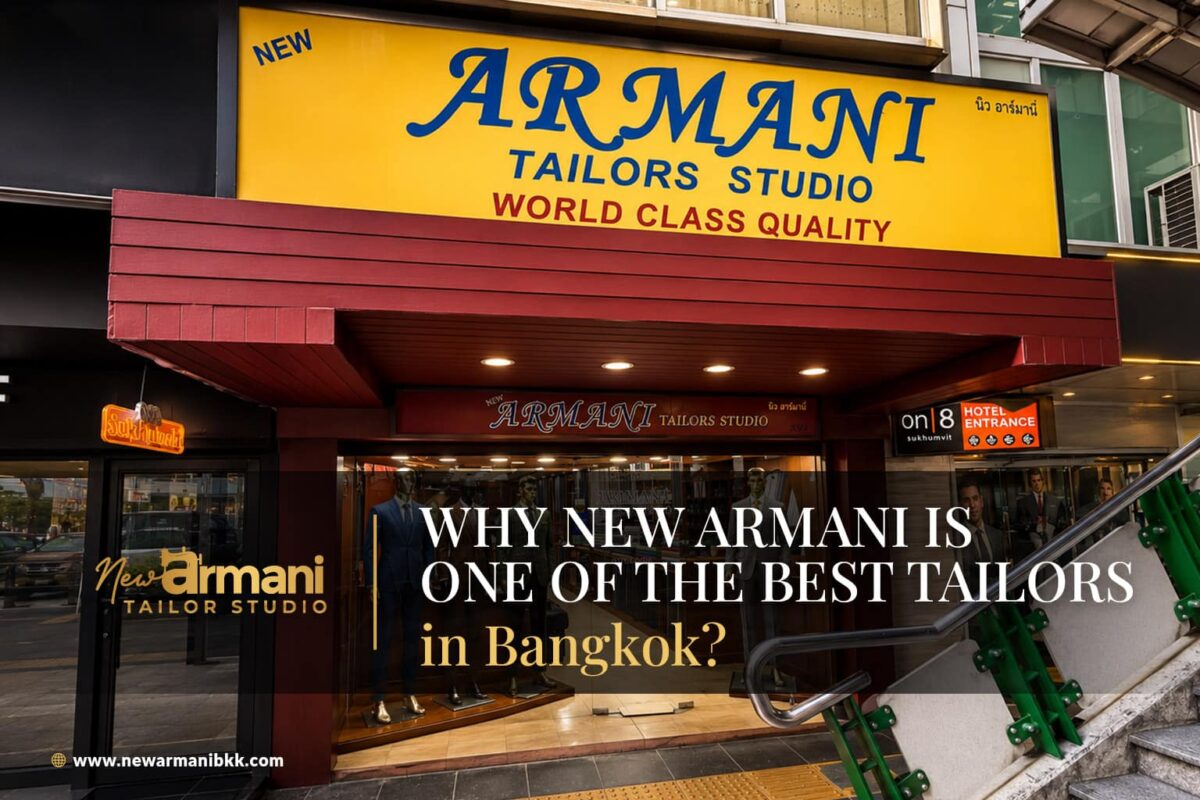
New Armani Tailor Studio has provided bespoke tailoring in Bangkok since 2006. Located on Sukhumvit Road near BTS Nana, the studio serves travelers, business professionals, wedding clients and returning international customers.
The consultation begins by understanding how and where the garment will be worn. Fabric, climate, construction, preferred fit, occasion and travel schedule are discussed before production begins.
Customers can personalize suits, shirts, trousers, tuxedos and other garments, followed by detailed measurements and scheduled fittings. Visitors with a limited Bangkok stay should provide their arrival and departure dates before the completion timeline is confirmed.
Conclusion
Bangkok became a hub for bespoke suits because it made personalized tailoring practical for an international audience. The city combined workshop experience, diverse fabrics, individual fittings, competitive value and service designed around travelers.
At its best, Bangkok tailoring respects the principles that have shaped bespoke clothing for generations while adapting the experience to a modern global city.
A bespoke suit is not valuable simply because it is produced quickly or described using a luxury label. Its value comes from how carefully the tailor listens, measures, cuts, fits and refines the garment for the individual who will wear it.
Travelers considering a bespoke suit in Bangkok should research the tailor, ask how the garment will be constructed, allow enough time for fittings and choose a studio that communicates clearly from the first consultation to final delivery.
Ready to Create Your Bespoke Suit in Bangkok?
Book your consultation near BTS Nana and let the team plan your measurements, fabric selection and fitting schedule around your Bangkok visit.
Frequently Asked Questions
A bespoke suit is created specifically for one customer, usually using an individual pattern and a series of fittings. Its design, proportions, fabric and construction are selected according to the wearer’s measurements, posture, preferences and intended use.
Bespoke suits are popular in Bangkok because the city offers experienced tailoring, broad fabric choices, competitive pricing and fitting schedules that can accommodate many international travelers.
The time required depends on the fabric, construction, design, workshop schedule and number of fittings. Customers should provide their departure date before ordering and receive a confirmed timeline directly from the tailor.
No. Traditional bespoke tailoring uses a pattern created specifically for the individual, while made-to-measure usually modifies an existing base pattern. Both can produce good results, but customers should ask the tailor which process is being used.
Review recent customer feedback, ask about fabric composition and construction, confirm the number of fittings, examine real finished garments and make sure the tailor provides clear pricing and a realistic completion schedule.
About James Artre
James Artre owner of New Armani Tailor Studio and has more than 20 years of experience in bespoke tailoring.
View all posts by James Artre
2 thoughts on “How Bangkok Became the Hub for Bespoke Suits”